Foot Massage vs. Reflexology: What NYC Guests Should Know Before Booking
July 28, 2026Couples Massage NYC: How to Plan a Relaxing Experience Together
July 28, 2026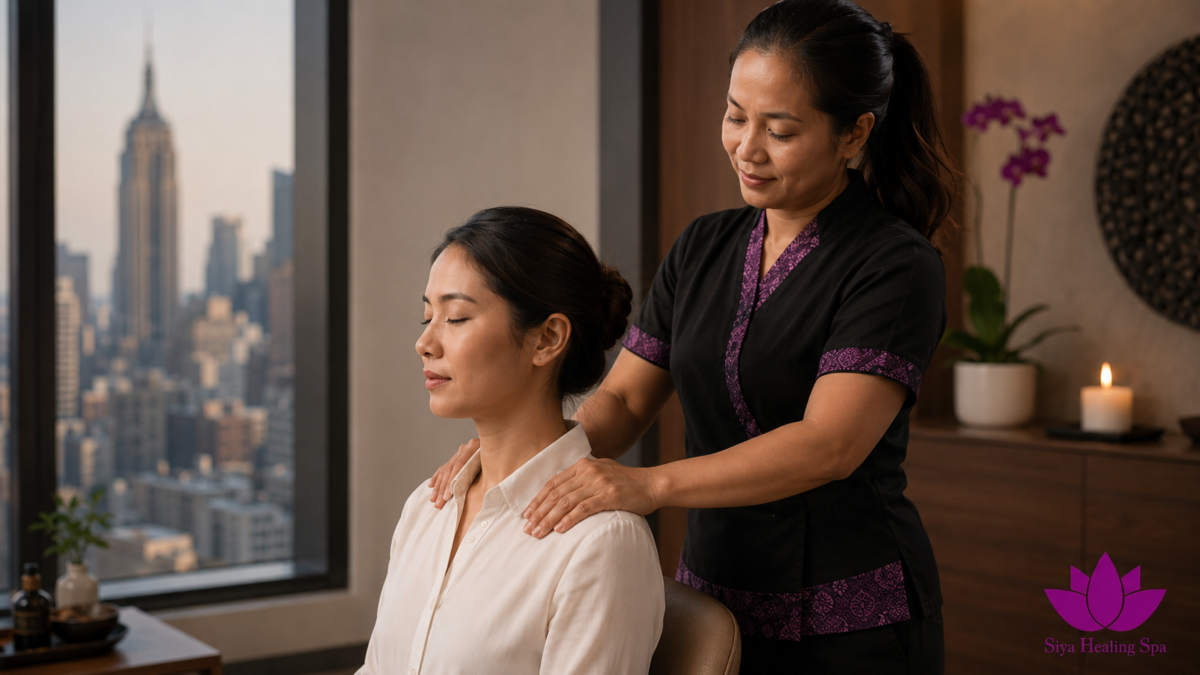
back neck and shoulder massage NYC New York asks a great deal from the upper body. A normal weekday may include hours at a laptop, repeated phone use, a heavy work bag, a crowded subway ride, and very little time to change position. By the end of the day, the neck can feel stiff, the shoulders may seem permanently raised, and the muscles across the upper back can feel tired or tight.
That is why searches such as “back and neck massage near me,” “shoulder massage NYC,” and “stress relief massage near me” are common among office workers, commuters, business travelers, and other busy New Yorkers. Many people are not necessarily looking for an elaborate spa day. They want a professional session that fits their schedule, respects their preferences, and focuses attention on the areas that carry the most everyday tension.
A back, neck, and shoulder massage can be planned as a focused session or included within a broader full-body experience. The right choice depends on how much time you have, how you prefer pressure to feel, and whether you want concentrated work or a more balanced session. This guide explains what to expect, how to communicate with your massage professional, and how to choose among Siya Healing Spa’s three Manhattan locations.
Quick answer: A back, neck, and shoulder massage focuses on the muscles commonly affected by desk work, screen use, commuting, and daily stress. The session may use steady compression, kneading, broad pressure, assisted positioning, or gentle stretching, depending on the service selected and the guest’s comfort. It is a wellness service, not a substitute for medical diagnosis or treatment.
Why Desk Work Can Make the Upper Body Feel Tense
Desk work often looks physically easy, but remaining in one position for a long period can be demanding. When attention is fixed on a screen, people may gradually lean forward, round the shoulders, or hold the head in front of the torso. A laptop placed too low can encourage the eyes and chin to angle downward. A mouse positioned too far away may keep one shoulder working harder than the other.
Phone habits can add another layer. Looking down at a device, gripping it for long periods, or holding it between the shoulder and ear may create a feeling of fatigue around the neck and upper back. Even emotional concentration can affect posture. During a deadline or difficult meeting, many people unknowingly lift their shoulders or brace their jaw.
Commuting also matters. Carrying a tote or backpack, standing while holding a subway pole, and moving through crowded sidewalks can make the upper body feel more guarded. None of these habits automatically means that something is medically wrong. They do explain why many New Yorkers appreciate dedicated time to slow down, change position, and receive professional bodywork.
What Is a Back, Neck, and Shoulder Massage?
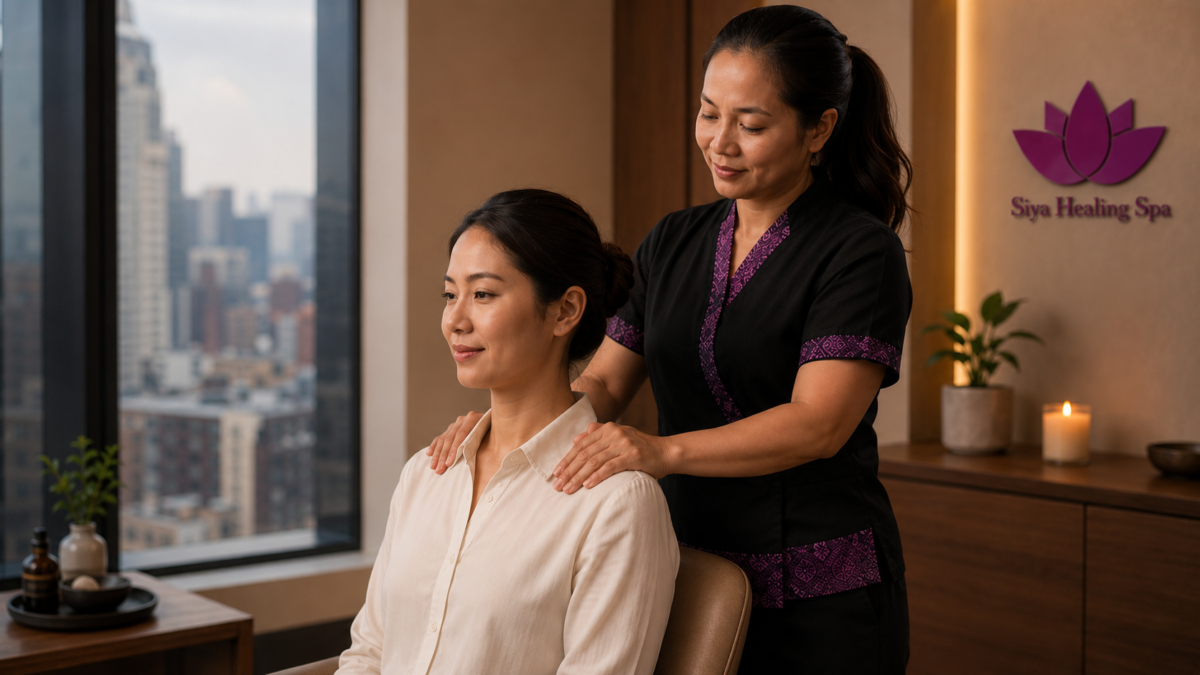
A back, neck, and shoulder massage is a focused bodywork session that gives extra time to the upper torso. Depending on the service and the individual practitioner, techniques may include:
- Broad palm pressure across the back
- Gentle or moderate kneading around the shoulders
- Focused compression beside the shoulder blades
- Careful work along the neck muscles
- Attention to the arms or hands when screen use is part of the concern
- Assisted movement or stretching within a comfortable range
- Slower, calming pressure intended to support relaxation
The exact sequence should not be identical for every guest. Someone who spends the day typing may want attention across the shoulders, forearms, and hands. A traveler carrying luggage may prefer broader back and shoulder work. A guest who dislikes intense pressure may benefit more from a slower, moderate approach than from forceful work.
At Siya Healing Spa, guests can discuss their preferred pressure, areas of focus, and areas they want avoided before the session begins. Communication is not an interruption to a massage; it is part of a professional experience.
Thai Massage, Thai Combination, or Focused Bodywork?
People searching for a “back muscle massage” or “back and neck massage near me” may not know which service name best matches what they want. The following distinctions can help.
Thai Yoga Massage
Thai Yoga Massage typically uses compression and assisted stretching. It may involve more movement than a conventional table massage and is often selected by guests who enjoy an active bodywork experience. The practitioner may work with different parts of the body rather than remaining only at the neck and shoulders.
Thai Combination Massage
Thai Combination Massage blends elements of Thai bodywork with techniques more familiar to guests who prefer table-based massage. It can be a practical option for someone who wants both general relaxation and additional time for the upper back, neck, or shoulders.
Focused Back, Neck, and Shoulder Work
A focused approach gives a larger share of the appointment to the upper body. This can suit a guest with limited time or a strong preference for particular areas. However, “focused” should not mean that maximum pressure is automatically appropriate. Skilled bodywork is based on control, communication, and responsiveness—not simply intensity.
If you are unsure which format to choose, describe the experience you want rather than trying to diagnose yourself. For example: “I sit at a computer most of the day, my shoulders feel tight, and I prefer medium pressure.” That information is more useful than requesting the strongest possible massage.
How Much Time Should You Book?
Appointment length changes what can realistically be covered.
| Session Length | Often Best For | What to Keep in Mind |
|---|---|---|
| 45 minutes | A concentrated session for a limited number of areas | Priorities should be clear because time is focused |
| 60 minutes | Upper-body focus with some room for broader work | A practical choice for a lunch break or after work |
| 90 minutes | More complete bodywork plus extra upper-body attention | Allows a slower pace and more transitions |
| 120 minutes | Guests who prefer an extended, unhurried experience | Best when you have sufficient time before and after |
A shorter session is not automatically less effective as a relaxation experience, and a longer session is not automatically better for every person. The most useful duration is the one that matches your schedule and expectations. If you want the neck, shoulders, upper back, lower back, arms, hands, and legs all included, a longer appointment will usually allow the practitioner to work without rushing.
What Should You Tell the Massage Professional?
Clear communication helps make the session more comfortable and relevant. Before the massage begins, consider sharing:
- Where you feel everyday tension. Point to the area rather than relying only on a broad term such as “back.”
- What pressure you normally prefer. Light, medium, and firm can feel different from one person to another, so provide feedback during the session.
- Whether you sit, stand, travel, or lift for work. Daily activities help explain your preferences without turning the massage into a medical assessment.
- Any area you do not want massaged. Guests may always set boundaries.
- Any recent injury, surgery, illness, pregnancy, or medical concern. When appropriate, obtain guidance from a qualified healthcare professional before booking.
Pressure should feel purposeful and manageable. More discomfort does not necessarily produce a better wellness experience. If the pressure feels too strong, sharp, or uncomfortable, say so immediately. A professional practitioner should adjust.
When Massage May Not Be the Right First Step
Massage is a wellness service and should not be used to diagnose an unexplained symptom. Seek prompt medical advice instead of booking a routine massage if you have severe or sudden pain, pain following a significant accident, chest pain, difficulty breathing, marked weakness, loss of sensation, fever, unexplained swelling, or other symptoms that concern you.
People with blood-clot risks, certain cardiovascular conditions, recent surgery, acute injuries, skin infections, or other relevant medical conditions should ask a qualified healthcare professional whether massage is appropriate. If a clinician has given you specific restrictions, tell the massage practitioner before the session.
This distinction matters for both safety and expectations. Massage may support relaxation and help a guest feel more comfortable after ordinary daily activity, but Siya Healing Spa does not present massage as a cure or guaranteed treatment for pain, migraine, injury, or disease.
How to Choose the Most Convenient Siya Location
Convenience is part of consistency. A wellness routine is easier to maintain when the location works with the rest of your day.
Midtown: For Office Workers, Commuters, and Hotel Guests
If your day centers on Bryant Park, Times Square, Herald Square, Grand Central, or nearby offices, Siya Healing Spa Midtown can fit naturally before work, after work, or between activities. Midtown is especially practical for guests who want to step away from screens and city movement without traveling far outside their workday route.
Downtown / FiDi: For Wall Street and Lower Manhattan
Professionals working around Wall Street, the Financial District, Battery Park, and Lower Manhattan can explore Siya Healing Spa Downtown / FiDi. A focused upper-body session may be appealing after a long day of meetings, laptop work, or commuting through a busy transit hub.
Uptown: For Hamilton Heights and Upper Manhattan
For residents, students, and professionals in Hamilton Heights, Harlem, and Upper Manhattan, Siya Healing Spa Uptown offers a neighborhood option. Choosing a location close to home can make it easier to book an unhurried evening or weekend session.
All three locations provide access to professional Thai-inspired bodywork. The best branch is generally the one you can reach without adding unnecessary stress to the day.
Simple Habits Between Appointments
Massage does not replace daily movement or an appropriate workspace setup. A few practical habits may help reduce the sense of accumulated desk fatigue:
- Change position periodically instead of trying to hold one “perfect” posture all day.
- Place frequently used items within comfortable reach.
- Raise the screen when possible so you are not continually looking far downward.
- Let the shoulders drop away from the ears during pauses.
- Alternate which side carries a bag, or use a balanced backpack when practical.
- Take brief walking or movement breaks.
- Avoid forcing aggressive neck stretches, especially when an area already feels irritated.
The goal is not to perform a complicated routine at work. It is to interrupt long periods of stillness and notice habits before they become the default for the entire day.
Frequently Asked Questions
Is a back, neck, and shoulder massage good for desk workers?
It can be a suitable wellness option for desk workers who want relaxation and focused attention on areas that feel tired or tense after daily activity. It is not medical treatment, and unexplained, severe, or persistent symptoms should be discussed with a qualified healthcare professional.
Should I choose firm pressure for tight shoulders?
Not automatically. The most appropriate pressure is one that feels controlled and comfortable for you. Firm pressure may appeal to some guests, while others respond better to moderate, slower work. Ask the practitioner to adjust at any time.
Is 45 minutes enough for the neck, shoulders, and back?
It can be enough for a focused appointment when priorities are clearly stated. If you also want full-body work, 60 or 90 minutes may provide a more balanced pace.
What should I wear for Thai massage?
For a Thai-style session involving assisted movement, comfortable clothing that allows easy movement is generally helpful. Requirements can vary by selected service, so confirm details when booking.
Can I book after work?
Availability varies by day and location. Review the booking schedule for the branch closest to your office, commute, or home and reserve in advance when possible.
Which Siya location is best for me?
Choose Midtown for convenient access near central Manhattan offices and major transit, Downtown / FiDi for Wall Street and Lower Manhattan, or Uptown for Hamilton Heights and Upper Manhattan.
Make Space for a Better Pause in Your NYC Routine
Upper-body tension is a familiar part of modern city life, but a massage appointment should be more than a search for the strongest pressure available. The best experience begins with realistic expectations, clear communication, an appropriate session length, and a location that genuinely fits your day.
Whether you work near Bryant Park, spend your weekdays in the Financial District, or live in Upper Manhattan, Siya Healing Spa offers three convenient options for professional Thai-inspired bodywork. Explore Midtown, Downtown / FiDi, or Uptown and choose the branch and appointment length that best match your schedule and preferences.