
What Is a Full-Body Massage? A First-Time Guide for NYC Guests
July 27, 2026
Foot Massage vs. Reflexology: What NYC Guests Should Know Before Booking
July 28, 2026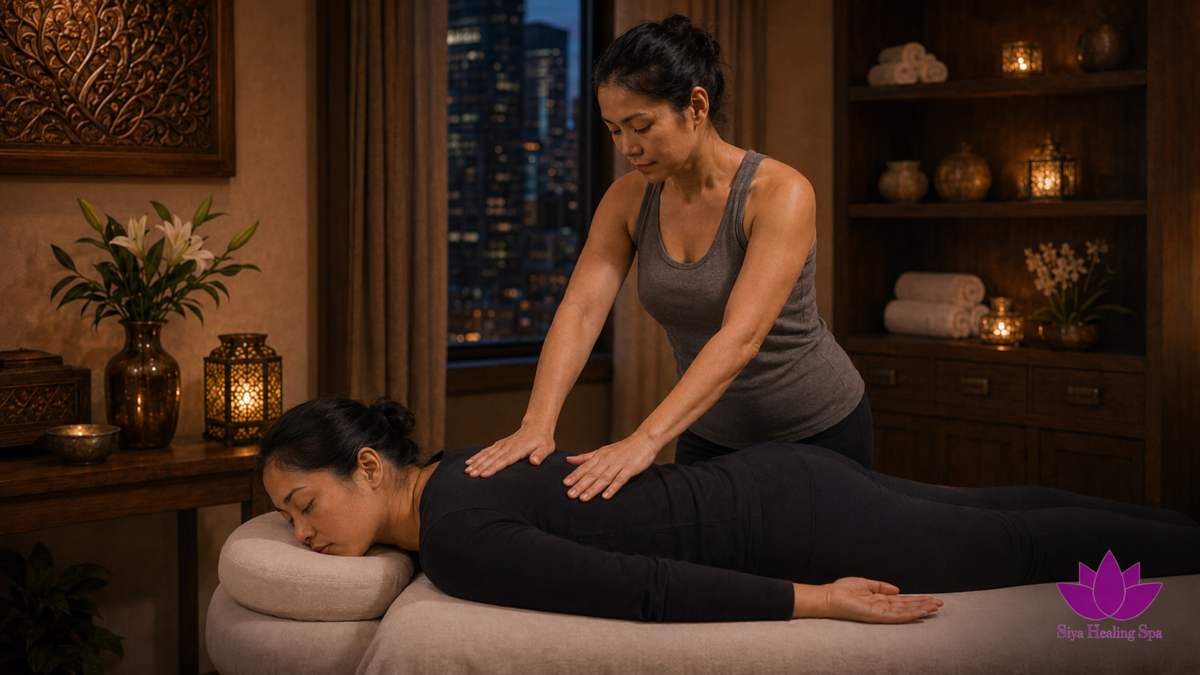
Thai Massage vs. Deep Tissue Massage.When your body feels tired after commuting, working at a desk, walking through Manhattan, or keeping up with a demanding schedule, choosing a massage can sound simple—until you see the menu. Two of the most common searches are “Thai massage near me” and “deep tissue massage near me.” Although both services may be chosen by guests who want focused bodywork, they are not the same experience.
The short answer is this: Thai massage generally combines rhythmic pressure with assisted movement or stretching, while deep tissue massage usually uses slower, concentrated pressure on selected areas. The better choice depends on how you want the session to feel, whether you prefer movement or stillness, and which areas you would like the practitioner to prioritize.
This guide explains the differences in plain language so you can make a more confident booking decision at Siya Healing Spa in New York City.
Quick Answer: What Is the Main Difference?
Thai massage is often more active and movement-based. Depending on the service selected, a practitioner may use palms, thumbs, forearms, or supported body positioning while guiding the guest through comfortable movements. Many Thai-style sessions are performed with the guest wearing flexible clothing.
Deep tissue massage is usually more localized and methodical. The practitioner may work slowly through areas that feel tight or overused, adjusting pressure according to the guest’s comfort and feedback. It is commonly associated with an oil- or lotion-based table massage, although the exact format can vary.
Neither style is automatically “better,” and stronger pressure does not automatically mean a better massage. A professional session should be responsive, appropriately paced, and shaped around the guest’s preferences.
What Does Thai Massage Feel Like?
Thai massage is known for its combination of pressure, positioning, and movement. A session may include gentle rocking, compression, assisted stretching, or work along different areas of the body. The rhythm can make the experience feel connected from one area to the next rather than limited to a single spot.
Guests who enjoy Thai massage often appreciate that it feels interactive. You do not need to be flexible, and the session should not become a test of how far your body can move. A practitioner can reduce the range, slow the pace, or omit a technique when necessary.
At Siya Healing Spa, the Thai-style category includes different experiences rather than one rigid routine. Thai Yoga may emphasize clothed, assisted movement. Thai Combination may blend Thai techniques with table-massage elements. Thai Therapeutic-Style may place more attention on selected areas while remaining a wellness service rather than medical treatment.
Thai massage may suit you if you:
- Prefer an active style rather than remaining completely still.
- Enjoy assisted movement and whole-body bodywork.
- Want a session that can address several areas in a connected sequence.
- Prefer wearing comfortable clothing during the service.
- Are curious about traditional Thai-inspired techniques adapted to your comfort.
What Does Deep Tissue Massage Feel Like?
Deep tissue massage typically uses slower work and sustained attention in specific areas. Instead of moving quickly across the body, the practitioner may gradually work through layers of everyday tension while checking whether the pressure remains manageable.
Despite the name, deep tissue massage should not be a contest in pain tolerance. Excessive pressure can cause a guest to brace, hold their breath, or tighten surrounding muscles. Clear communication is more useful than silently enduring discomfort. “A little lighter,” “please stay at that pressure,” and “can we focus more on my upper back?” are all appropriate requests.
Deep tissue massage may suit you if you:
- Prefer focused work on one or two priority areas.
- Like slower, more concentrated pressure.
- Spend long hours sitting, standing, lifting, or traveling.
- Prefer a more familiar table-massage format.
- Want to tell the practitioner exactly where you notice everyday muscle tension.
Massage is a wellness service and is not a substitute for diagnosis or medical care. New, severe, unexplained, or persistent symptoms should be discussed with a qualified healthcare professional.
Thai Massage vs. Deep Tissue Massage: Side-by-Side
| Feature | Thai Massage | Deep Tissue Massage |
|---|---|---|
| 1.General style | Rhythmic pressure with assisted positioning or movement | Slow, concentrated work on selected areas |
| 2.Guest participation | More interactive | Usually more passive |
| 3.Clothing | Often performed in flexible clothing | Commonly performed as a draped table service |
| 4.Typical pace | Flowing and connected | Gradual and focused |
| 5.Main appeal | Movement, whole-body integration, and Thai-inspired techniques | Targeted pressure and attention to specific areas |
| 6.Pressure | Can range from gentle to firm | Often medium to firm, adjusted to comfort |
| 7.Best choice for | Guests who enjoy assisted movement and variety | Guests who prefer localized, methodical work |
These are general differences, not guarantees. Technique can vary by service, practitioner, session length, and the preferences you communicate before and during the appointment.
Is Thai Massage the Same as Deep Tissue Massage?
No. However, the two categories can overlap.
Thai practitioners may use firm compression and detailed pressure, while a deep tissue session may include movement or stretching when appropriate. A Thai Combination massage can be useful for guests who do not want to choose one extreme. It may combine Thai-inspired pressure and movement with elements of a conventional table massage.
If you are unsure, do not rely only on the service name. Explain what you enjoy, what you dislike, how much movement you want, and which areas you want prioritized. That information helps the spa recommend a closer match.
Which Massage Is Better for Desk Workers and Commuters?
Both can be reasonable choices, but the decision depends on the experience you prefer.
A desk worker who wants slow, specific attention around the upper back, shoulders, or hips may prefer deep tissue massage. Someone who feels generally compressed after sitting and wants a more active, whole-body session may prefer Thai massage or Thai Combination.
For office workers, commuters, hotel guests, and visitors near Bryant Park or Grand Central, the Siya Healing Spa Midtown location provides a convenient option in central Manhattan. When booking, mention whether your day involves prolonged sitting, standing, walking, or travel so the practitioner understands the context of your request.
Which Massage Is Better After Walking Around New York?
After a long day of walking, some guests want focused work for the legs and feet; others prefer a balanced full-body session. Thai massage can provide a connected experience involving multiple areas, while deep tissue massage may be better when you want the session concentrated on a smaller number of priorities.
If your day is centered around the Financial District, Stone Street, Wall Street, or Lower Manhattan, explore the Siya Healing Spa Downtown / FiDi location. Choosing a nearby branch reduces extra travel and makes it easier to fit the appointment around work, sightseeing, or dinner plans.
What Is the Best Option for an Uptown Routine?
Consistency often matters more than chasing the most intense session. If massage is part of your regular wellness routine, choose a style and duration that feel sustainable and a location you can reach without turning the appointment into another exhausting commute.
Guests in Hamilton Heights, Harlem, near City College, or elsewhere in Upper Manhattan can learn more about the Siya Healing Spa Uptown location. A neighborhood appointment may be especially practical when you want bodywork to fit naturally into your week.
How Much Pressure Should You Request?
Use comfort and responsiveness—not pride—as your guide. Pressure preferences are personal and can change from one area of the body to another. You may enjoy firm pressure across larger muscles but prefer lighter work around the neck or feet.
Before the session, tell the practitioner:
- Whether you prefer light, medium, or firm pressure.
- Which areas you want prioritized.
- Which areas should receive lighter work or be avoided.
- Whether you enjoy assisted stretching.
- Whether you prefer a quiet session or occasional pressure check-ins.
During the session, speak up early. Small adjustments are easier than waiting until the experience becomes uncomfortable.
How Long Should You Book?
A shorter appointment can work when your goal is limited and clearly defined. A longer session provides more time for a full-body sequence while still allowing attention to priority areas. If you want both Thai-style movement and concentrated work, additional time may prevent the session from feeling rushed.
Think about scope:
- Choose a shorter session for a concise wellness break or a small focus area.
- Choose 60 minutes for a standard session with clear priorities.
- Consider 90 minutes when you want a fuller pace and several focus areas.
- Consider 120 minutes when you enjoy an unhurried, comprehensive experience.
Availability and service durations can vary, so review the current booking menu before making your selection.
How to Choose Between Thai and Deep Tissue Massage
Choose Thai massage if you want movement, assisted positioning, rhythmic pressure, and a more interactive experience.
Choose deep tissue massage if you want slower, concentrated work and prefer to focus on selected areas.
Choose Thai Combination massage if both descriptions appeal to you or if you want Thai-inspired techniques blended with a table-massage approach.
If this is your first visit, the safest strategy is not to choose the “strongest” service. Choose the format that sounds most comfortable, then communicate clearly with your practitioner.
Frequently Asked Questions
Does Thai massage use deep pressure?
Thai massage can include firm pressure, but it does not have to. Pressure, pace, and movement should be adjusted to the guest’s comfort.
Is deep tissue massage supposed to hurt?
Deep tissue massage may feel intense in some areas, but sharp pain or pressure that makes you brace should be communicated immediately. More pain does not equal a more effective wellness session.
Do I keep my clothes on for Thai massage?
Many Thai-style sessions are performed in comfortable, flexible clothing. The format can vary by service, so confirm the preparation instructions when booking.
Can I request both Thai techniques and focused pressure?
Yes. Thai Combination massage may be appropriate for guests who want elements of both approaches. Explain your preferences before the session so the practitioner can recommend the closest available service.
Which Siya Healing Spa location should I choose?
Choose the branch that best fits your day: Midtown for central Manhattan, Bryant Park, or Grand Central; Downtown / FiDi for Wall Street and Lower Manhattan; or Uptown for Hamilton Heights, Harlem, and Upper Manhattan.
Find the Right Massage Experience in Manhattan
The best choice between Thai massage and deep tissue massage is the one that matches your preferred pace, pressure, movement, focus areas, and schedule. You do not need to understand every technique before booking. Start with the experience you want, communicate your preferences clearly, and allow the practitioner to make appropriate adjustments within the selected service.
Siya Healing Spa serves guests across Manhattan through three locations. Explore Midtown, Downtown / FiDi, or Uptown to review the location that works best for you and book your next professional massage experience in NYC.